Physical Address
304 North Cardinal St.
Dorchester Center, MA 02124
Physical Address
304 North Cardinal St.
Dorchester Center, MA 02124
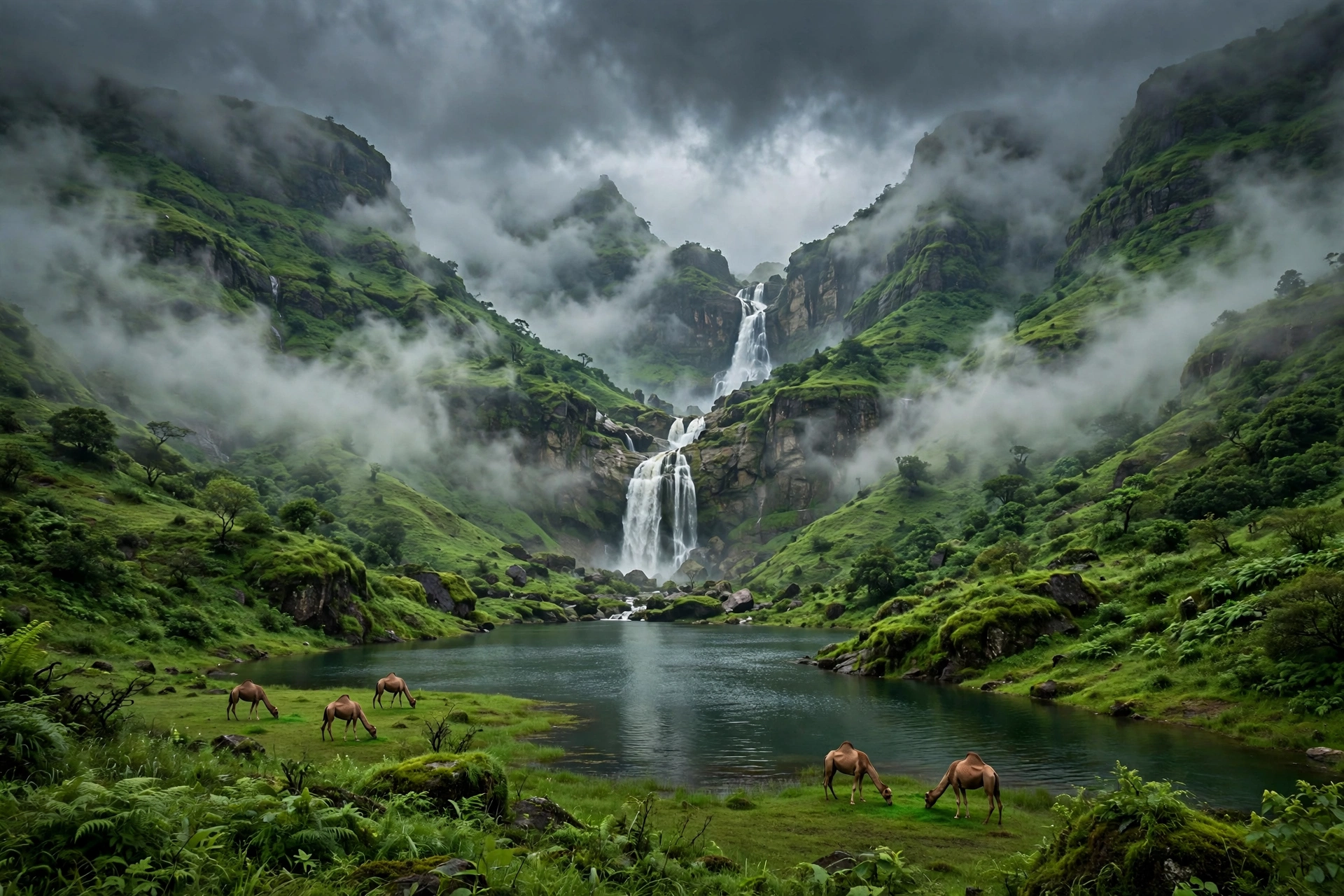
Every summer, while the rest of the Gulf bakes past 45°C, something extraordinary happens in Oman’s southern Dhofar region. The Khareef — the Indian Ocean monsoon, the only one to touch the Arabian Peninsula — rolls in off the sea, wrapping the mountains in mist and drizzle. Brown desert hills turn emerald green, seasonal waterfalls thunder off cliffs, and temperatures drop to a blissful 23–26°C. The word “khareef” literally means “autumn” in Arabic, but in Dhofar it means the green season — and it draws over a million visitors a year.
The official Khareef Dhofar 2026 season ran from 21 June to 21 September, with the Dhofar Municipality hosting 125+ cultural, artistic, sporting and heritage events across Salalah, Mirbat, Taqah and beyond. The greenery builds gradually: late June is misty but patchy, mid-July to mid-August is the peak for the deepest green and strongest waterfalls, and by September the monsoon retreats while the hills stay green a little longer. Exact dates shift slightly each year and are announced a few months ahead — always check before booking for the following season.
Salalah’s monsoon isn’t the tropical downpour of South Asia — it’s gentle drizzle, low cloud and drifting fog. Daytime temperatures hover around 23–26°C with high humidity, the skies stay overcast, and the air feels clean and cool. It’s nature’s air conditioning, and for UAE residents it’s the rare summer escape that doesn’t require leaving the region. Pack a light jacket — evenings in the mountains can feel genuinely chilly, a surreal experience in August in Arabia.
The showpiece of the season, about 40 km from Salalah. After the rains, water pours off the clifftops in a curtain that can fall 100 metres, while the valley floor floods into lakes you can cross by pedal boat, with camels grazing the green banks. Go on a weekday morning — weekend afternoons get packed.
Dhofar’s famous springs (ain) burst back to life in Khareef. Ain Athum’s waterfall, Ain Razat’s gardens and Ain Khor’s cascades are all worth the drive into the hills.
Rain-fed falls like Wadi Darbat and the dramatic seasonal cascades around the Jebel are at their fullest in the wetter middle weeks (July–August). Shoulder weeks bring lighter flow but far fewer crowds.
West of Salalah, Mughsail’s white-sand beach is stunning in any season — during Khareef, the famous blowholes (Al Marneef Cave area) erupt with monsoon-swollen seas.
Charming coastal towns east of Salalah with old merchant houses, a castle museum in Taqah, and Mirbat’s historic trading-port atmosphere. The coastal road between them is one of Oman’s prettiest drives.
Dhofar was the heart of the ancient frankincense trade. The UNESCO-listed sites — Al Baleed Archaeological Park and the Museum of the Frankincense Land in Salalah, plus Sumhuram in Khor Rori — are fascinating year-round.
Khareef is peak season — book accommodation 2–3 months ahead. Salalah’s beach resorts (Al Baleed, Rotana, Anantara) fill fast and charge premium rates in July–August. Apartments and mid-range hotels in the city offer better value. Staying slightly outside the centre, toward Taqah or the Ittin area, can mean quieter nights.
The season isn’t just nature — the Khareef Dhofar festival programme includes concerts, theatre, folklore performances, art exhibitions and sporting events. The 2026 edition featured the Dhofar International Theatre Festival and the inaugural Dhofar International Sculpture Festival. Evenings in Salalah during Khareef have a genuine festival buzz, with families picnicking in the mist late into the night.
Completely. There is nowhere else in Arabia — arguably nowhere else on earth — where you can stand in cool green mist in August, watch waterfalls pour off desert cliffs, and be back on a Dubai beach the same week. For the full Gulf picture, pair this with our Muscat travel guide and more Gulf destinations on Gulf Notice.