Physical Address
304 North Cardinal St.
Dorchester Center, MA 02124
Physical Address
304 North Cardinal St.
Dorchester Center, MA 02124

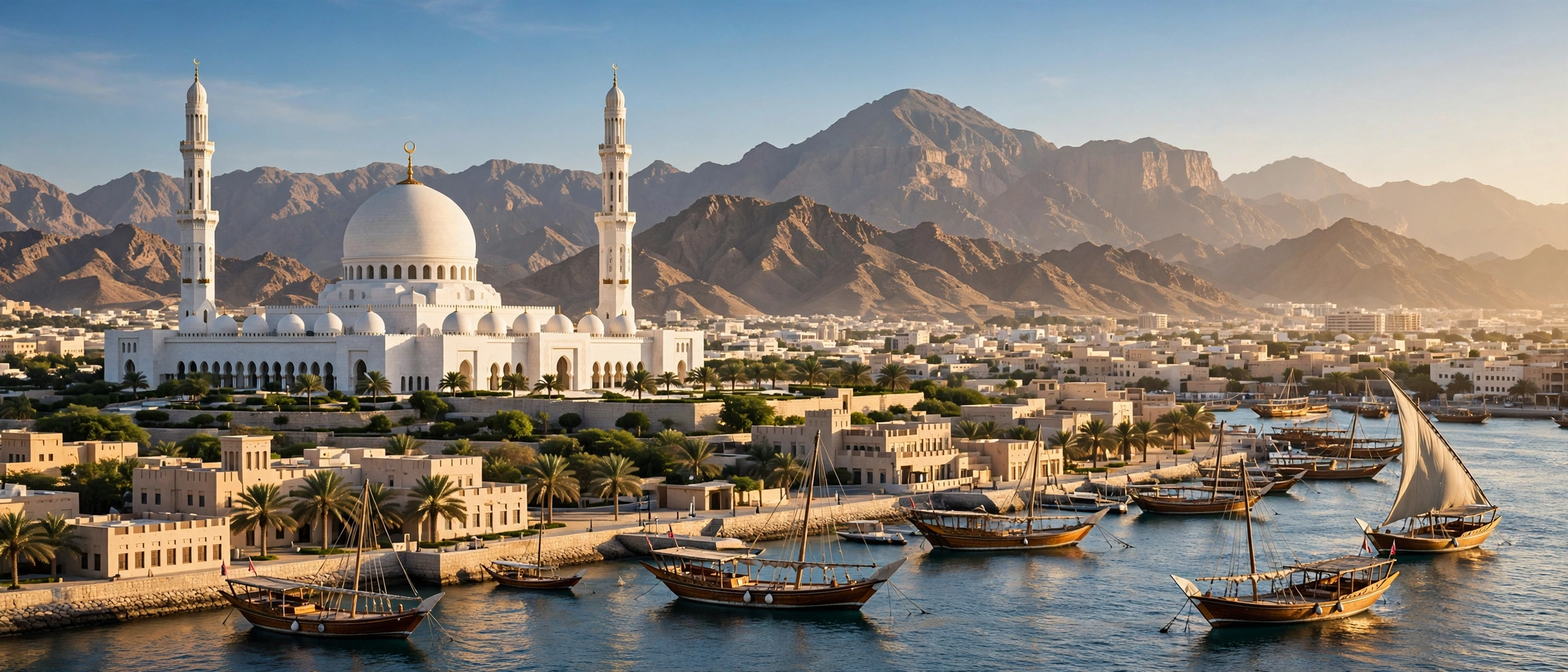
While Dubai races skyward and Riyadh reinvents itself, Muscat has quietly perfected a different kind of Gulf city — low-rise, whitewashed, and wrapped around a dramatic coastline where the Hajar mountains meet the Gulf of Oman. No skyscrapers crowd the corniche here; instead you’ll find 16th-century Portuguese forts, fragrant souqs, and some of the friendliest people in the region. Just an hour’s flight from Dubai, it’s the ideal long-weekend escape. Here’s how to do it right in 2026.
Muscat’s climate is the first thing to plan around. October to April is the sweet spot — warm days around 25–30°C, cool evenings, and perfect beach weather. Summer (May–September) is brutally hot and humid, with temperatures pushing past 40°C; if you must come then, plan indoor and evening activities. Unlike Salalah in the south, Muscat doesn’t get the Khareef monsoon — summer here is simply hot.
The city’s crown jewel and one of the most beautiful mosques in the Gulf. Its prayer hall holds one of the world’s largest hand-woven carpets and a magnificent chandelier. Non-Muslim visitors are welcome Saturday to Thursday, 8:00–11:00 AM (closed Fridays and on some public holidays). Dress modestly — women need to cover hair, arms and legs; abayas can often be borrowed at the entrance. Arrive early to beat tour groups.
Oman’s most atmospheric souq, a labyrinth of alleys selling frankincense, silver khanjars (ceremonial daggers), pashminas and Omani halwa. Haggling is expected and good-natured. Afterwards, walk the Mutrah Corniche at sunset — the waterfront promenade with its distinctive latticed pavilions is magical in golden light.
The twin 16th-century Portuguese forts guarding Muscat’s old harbour are the city’s most photographed landmarks. They sit dramatically on rocky outcrops flanking the bay — best admired from the corniche or the water, as interiors have limited public access.
A stunning piece of contemporary Omani architecture in Shati Al Qurum. Even if you don’t catch a performance, the building and its surrounding gardens are worth a visit; guided tours run on some days.
Muscat’s best-known public beach — a long sweep of sand popular for sunset walks. For a splurge, book a day pass or dinner at a luxury beach resort along the coast.
Near the Al Alam Palace in old Muscat, this excellent museum traces Oman’s maritime history, frankincense trade and culture. A great air-conditioned stop for the hottest hours.
Omani cuisine is subtle and fragrant — try shuwa (slow-cooked marinated lamb, traditionally cooked underground), mashuai (grilled kingfish with lemon rice), and Omani halwa with kahwa (cardamom coffee) for dessert. The Mutrah area has excellent affordable local restaurants; Qurum and Al Mouj offer international dining. For a memorable evening, book a dhow dinner cruise from Marina Bandar Al Rowdha.
Muscat’s hotel scene ranges from grand beach resorts (Al Bustan, Shangri-La Barr Al Jissah) to characterful old-town guesthouses in Mutrah and Muttrah’s harbour area. Qurum and Shatti Al Qurum put you near beaches and restaurants; Mutrah offers atmosphere and walkability; Al Mouj (The Wave) is the modern marina district. Book early for the October–April high season.
Three full days covers the Grand Mosque, Mutrah, the forts and museums, plus one day trip (Nizwa or Wadi Shab). Five days lets you add Jebel Akhdar or the Daymaniyats at a relaxed pace. Combine it with our wider Gulf coverage — Muscat pairs beautifully with a Salalah Khareef trip or a Dubai stopover for the perfect two-centre Gulf holiday.