Physical Address
304 North Cardinal St.
Dorchester Center, MA 02124
Physical Address
304 North Cardinal St.
Dorchester Center, MA 02124
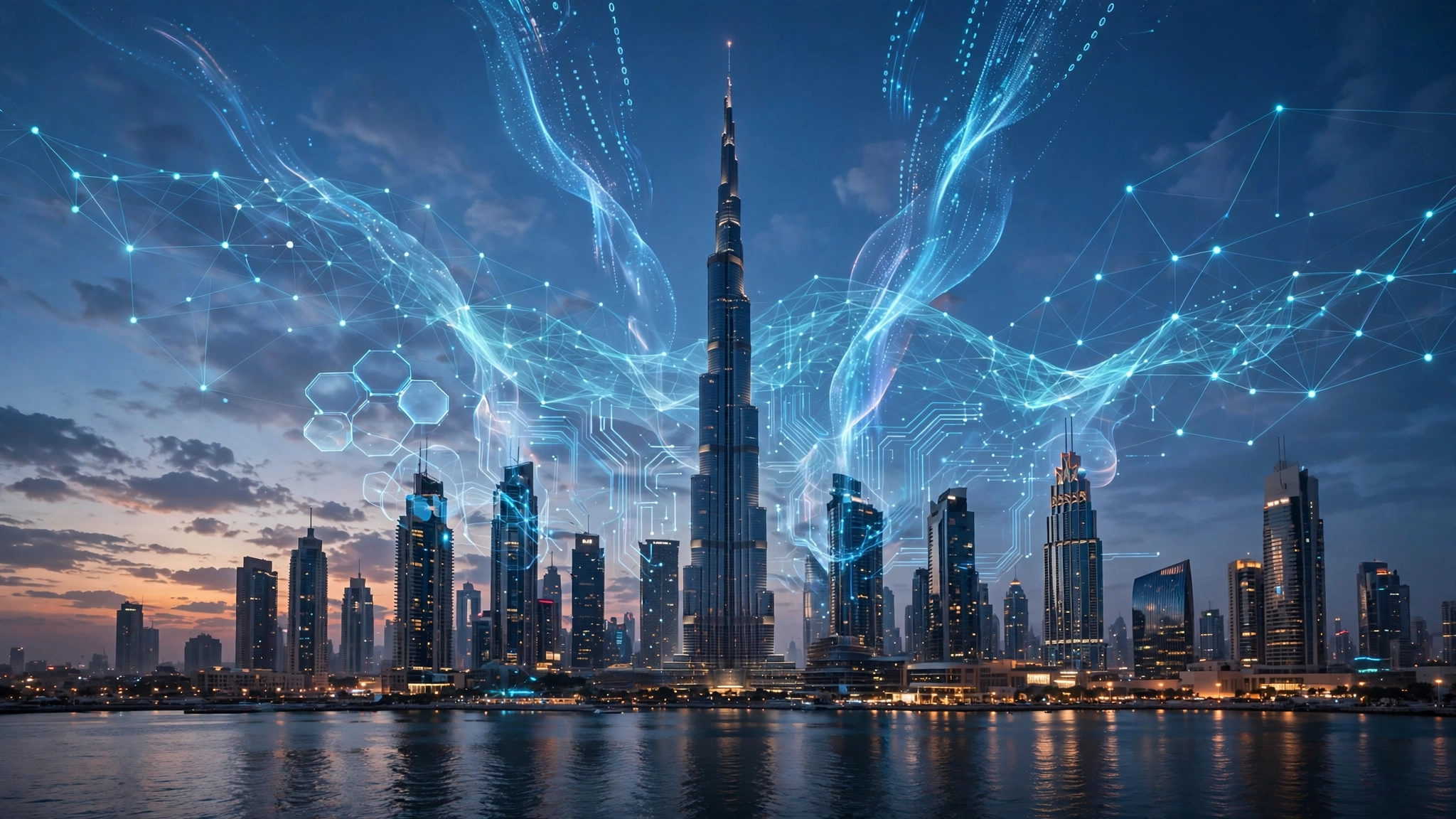
Dubai is not experimenting with artificial intelligence — it is building an entire economy around it. From a dedicated AI minister to AI officers in every government department, the emirate has turned AI adoption into national policy. Here is what Dubai’s AI strategy looks like in 2026, and what it actually means for residents, workers and businesses.
At the centre of the strategy is the Dubai Universal Blueprint for Artificial Intelligence, launched by Sheikh Hamdan bin Mohammed bin Rashid Al Maktoum, Crown Prince of Dubai. The Blueprint is a comprehensive framework to make Dubai the global benchmark for AI adoption across every sector.
Its headline targets are ambitious:
The Blueprint works alongside the D33 Economic Agenda, which aims to double the size of Dubai’s economy within a decade — with AI identified as a primary engine of that growth.
In the first phase of the plan, Dubai appointed a Chief Artificial Intelligence Officer in every government entity — making AI adoption someone’s explicit job, not a vague aspiration.
Dubai is now home to the largest dedicated AI cluster in the region, the Dubai AI Campus, hosting hundreds of specialised AI companies. Its Dubai AI Academy is committed to training and upskilling more than 10,000 AI professionals by 2030.
The UAE has deployed AI across more than 100 government services. In Dubai specifically, AI now runs behind the scenes in traffic management, hospital capacity planning, judicial processes and urban planning. Smart traffic systems have reportedly cut city congestion by over 20%, and AI-assisted medical diagnostics are helping doctors detect diseases earlier.
The UAE appointed Omar Sultan Al Olama as Minister of State for Artificial Intelligence back in 2017 — the world’s first minister-level position dedicated to AI. The country also founded MBZUAI, the world’s first graduate-level AI university, in Abu Dhabi.
Dubai AI Week brings together thousands of business leaders, investors and exhibitors from around 100 countries. The 2026 edition runs under the theme of AI as everyday economic infrastructure, and the startup ecosystem around it — from the Ignyte platform to Step Dubai — is channelling billions in deployable capital toward AI ventures.
The demand for AI skills in Dubai is real and growing. If you work here, three things matter:
For companies in Dubai, the strategy comes with both support and expectations:
If you are starting or scaling a company, see our Business guides for the practical side of operating in the emirate.
Residents already interact with Dubai’s AI push more than they realise: predictive traffic signals that adjust thousands of intersections in real time, AI-optimised metro inspections, drone deliveries serving schools and hospitals, and chatbots handling routine government transactions in minutes. The direction is clear — more services, faster, with less paperwork.
No strategy is without risks. AI adoption raises genuine questions about data privacy, job displacement in routine roles, and the concentration of powerful technology. Dubai’s answer so far is governance sandboxes and annual strategy reviews — the Blueprint is explicitly designed to be updated every year as the technology evolves. Whether execution matches ambition will be the story to watch through 2026 and beyond.
Dubai’s AI strategy is not a press release — it is appointments, campuses, licences and budgets. For residents, it means faster services and new career opportunities; for businesses, it means support if you adopt and pressure if you don’t. Stay updated with our UAE News coverage as the strategy unfolds.