Physical Address
304 North Cardinal St.
Dorchester Center, MA 02124
Physical Address
304 North Cardinal St.
Dorchester Center, MA 02124

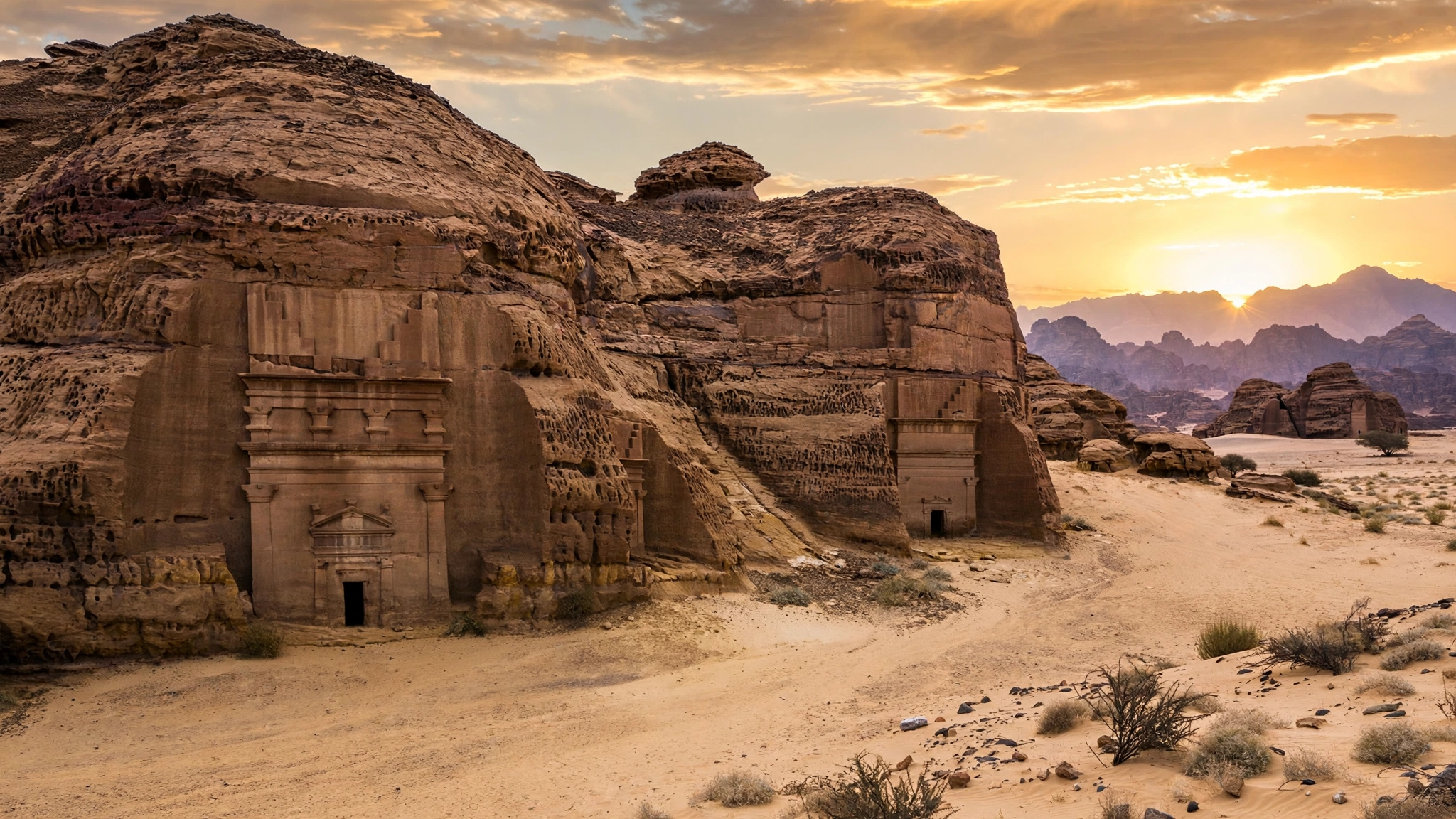
Two hours by air from Dubai, a desert valley in northwestern Saudi Arabia holds 200,000 years of human history: ancient Nabataean tombs carved into sandstone cliffs, a mirrored concert hall reflecting the desert, and some of the darkest stargazing skies on earth. AlUla has become the single best reason to visit Saudi Arabia — here is how to plan the trip.
AlUla is an oasis valley in the Madinah region that sat on ancient incense trade routes for millennia. Successive civilisations — Dadanites, Lihyanites, Nabataeans, Romans, early Muslims — left their mark here. Today the Royal Commission for AlUla is developing it as a flagship heritage tourism destination under Saudi Vision 2030, pairing world-class archaeology with luxury resorts and cultural festivals.
Hegra is the star: over 110 monumental tombs carved into sandstone outcrops by the Nabataeans — the same civilisation that built Petra, 500 km to the north — more than 2,000 years ago. It is the largest Nabataean settlement south of Petra, and with a fraction of Petra’s crowds you often explore with just a small group and your Rawi (local storyteller-guide). Guided tours are required; entry starts around SAR 95 per person. Book the earliest slot for the best light.
A massive sandstone formation sculpted by wind into the shape of an elephant, trunk touching the ground. The site now has seating and food outlets, making it AlUla’s favourite sunset spot.
The world’s largest mirrored building — a concert hall clad in reflective panels that mirror the desert, making it nearly invisible against the landscape. Even without a show on, it is worth seeing from outside.
A mudbrick village of narrow alleyways, watchtowers and a restored marketplace, inhabited for centuries until the 1980s. Wander it at golden hour, then eat in one of its restaurants.
Jabal Ikmah is an open-air library of thousands of pre-Islamic inscriptions in Aramaic, Dadanitic and Nabataean scripts — including one of the oldest Islamic-era inscriptions (644 CE). Nearby Dadan was the capital of the Dadanite and Lihyanite kingdoms, with its famous carved lion tombs.
A shaded walking trail through working farms and palm groves — a living contrast to the ancient stone all around.
Fly into AlUla International Airport (URY) — daily direct flights from Riyadh (about 90 minutes) and Jeddah. From the UAE, connect via Riyadh or Jeddah; there are no direct Dubai–AlUla scheduled flights at the time of writing, so check current schedules. Most visitors need a Saudi tourist visa or eVisa — apply online before you travel. Download the local transport app before arrival, as the sites are spread across the valley.
AlUla’s hotels are spectacular but limited — book 2–3 months ahead for winter season:
Prices are indicative 2026 ranges — confirm on the official booking platform when planning.
Land, check in, and head to Elephant Rock for sunset. Dinner in AlUla Old Town.
Morning: Hegra with the earliest tour slot. Afternoon: Dadan and Jabal Ikmah. Evening: a stargazing experience in the desert.
Morning: Oasis Heritage Trail. Midday: Old Town exploration and lunch. Afternoon: Maraya from outside (or a show if one is on). Optional day 4: hot air balloon at dawn.
AlUla is that rare destination that exceeds the hype: Petra’s civilisation without Petra’s crowds, set in a landscape that looks designed for cinema. For Gulf residents, it is one of the most rewarding short trips in the region. For more Saudi and Gulf travel inspiration, explore our Gulf News section and our Travel guides.