Dubai’s Most Famous Address — Still Worth the Premium?
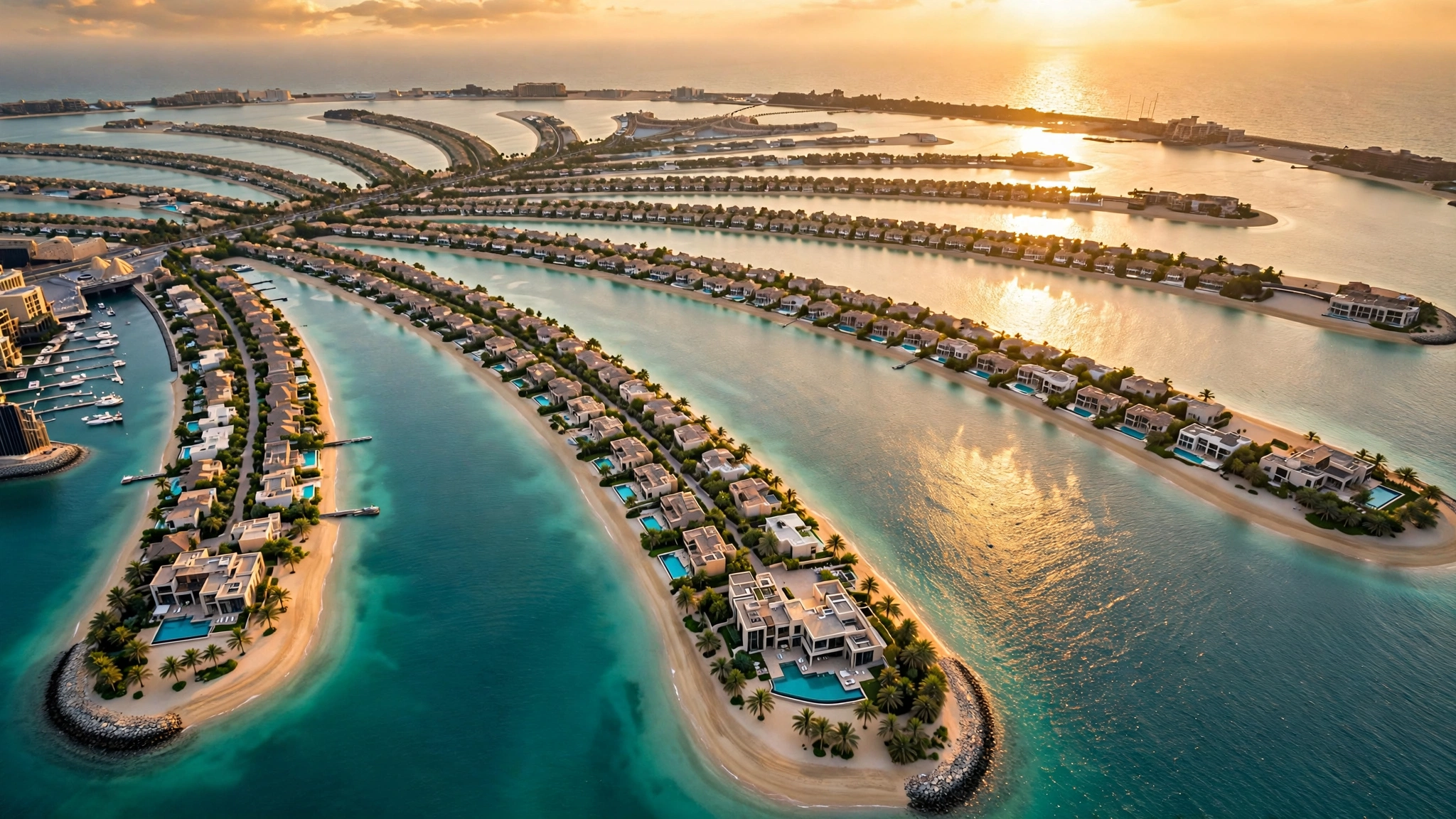
Seen from space, it is a palm tree drawn in sand and concrete. From the ground, Palm Jumeirah is Dubai’s definitive luxury address: private beaches, five-star resorts as neighbours, and villa prices that make headlines every quarter. In 2026, the Palm remains the emirate’s most expensive residential market per square foot — and one of its most resilient. Whether you are buying a lifestyle, an investment, or both, here is what the numbers actually look like.
What Villas Cost on the Palm in 2026
Prices vary enormously by location on the Palm (frond, trunk or crescent), plot size, beach frontage and finish quality. Indicative 2026 ranges:
- Garden Homes (mid-frond, non-beachfront): AED 18M–35M for 4–5 bedroom villas. The entry point to villa ownership on the Palm.
- Signature Villas (beachfront fronds): AED 35M–80M. Direct beach access, larger plots, premium finishes.
- Crescent (outer ring) villas: AED 60M–150M+. The most exclusive addresses, with Atlantis views and maximum privacy.
- Custom / bespoke mansions: AED 100M–300M+ for the trophy assets that set quarterly records.
Per-square-foot, prime Palm villas trade at roughly AED 4,000–7,000+, compared with AED 1,200–2,000 in mid-market villa communities. You are paying for scarcity: the Palm is finished. No new fronds are coming.
Figures are indicative 2026 market ranges — always verify against current DLD transaction data before making an offer.
Fronds, Trunk, Crescent: Location Decoded
- The Fronds: 16 residential fronds, each with its own character. Earlier letters (A–E) are closest to the trunk and mainland — shorter drives, slightly lower prices. Outer fronds offer more privacy and better sunset views over the Gulf.
- The Trunk: apartments and townhouses rather than villas, but worth knowing — it hosts the monorail, Nakheel Mall and the island’s retail spine.
- The Crescent: the breakwater ring. Home to Atlantis, resort hotels and the most expensive villas. Maximum prestige, maximum price, and a longer drive to the exit.
- Beachfront vs interior: direct beach access commands a 20–40% premium over equivalent interior villas. On the Palm, the sand is the asset.
Rental Yields: What Investors Actually Earn
Palm villas are not yield plays — they are capital-appreciation and trophy plays. Still, the rental market is strong:
- Long-term rental yields: typically 4.5–6% gross for villas. Lower than JVC or Business Bay, but on a far larger capital base with stronger appreciation history.
- Short-term / holiday homes: 7–10%+ gross is achievable for well-managed beachfront villas, given the Palm’s year-round tourist demand. Factor in 20–30% management and furnishing costs, plus DET holiday-home licensing.
- Capital appreciation: prime Palm villas have roughly doubled since 2020 lows. Whether that trajectory continues is the key investment question — the bull case rests on scarcity and Dubai’s continued inflow of wealthy relocators; the bear case is that much of the growth is already priced in.
The Costs Nobody Puts in the Brochure
- Service charges: among Dubai’s highest — commonly AED 25–40+ per sq ft annually for villas, reflecting private beach maintenance, landscaping and security. On a 7,000 sq ft villa, that can mean AED 200,000+/year.
- DLD transfer fee: 4% of the purchase price, plus admin fees. On a AED 30M villa, that is AED 1.2M.
- Maintenance: beachfront properties face accelerated wear — salt air, humidity and sand. Budget 1–2% of property value annually for upkeep.
- Furnishing: a Palm villa unfurnished is a hard sell in the rental market. Full luxury furnishing for a 5-bed villa: AED 500,000–1.5M.
Buying Checklist: Palm-Specific Due Diligence
- Verify the title deed with DLD — confirm villa type (Garden Home vs Signature), plot number and that beach access rights are as represented.
- Check service charge history: request three years of statements. Rising charges faster than inflation are a red flag.
- Inspect for coastal wear: get a specialist snagging/inspection survey — salt corrosion, waterproofing and pool/sea-wall condition.
- Confirm tenant status: existing tenancies transfer with the property; check Ejari terms and expiry.
- Financing: mortgages are available but LTVs are lower for luxury (typically 60–70% for villas above AED 5M). Pre-approval before viewing is essential at this level.
- Golden Visa: any Palm villa comfortably clears the AED 2M threshold — the 10-year visa is effectively bundled with the purchase.
Palm Jumeirah vs The Alternatives
- Emirates Hills: Dubai’s other billionaire enclave — golf-front rather than beachfront, larger plots, more privacy, slightly lower per-sq-ft prices.
- Jumeirah Bay Island (Bulgari Island): even more exclusive, even pricier — the Palm’s ultra-prime rival.
- Dubai Hills / Palm Jebel Ali: the “next Palm” narrative. Palm Jebel Ali’s relaunch offers Palm-style living at a fraction of the price — but it is years from maturity, while the Palm is a finished, proven market.
Verdict
The Palm is not a value investment — it is a scarcity investment. You are buying the one asset class in Dubai that cannot be replicated: beachfront villa land on the world’s most famous artificial island. For lifestyle buyers and wealth-preservation investors, that scarcity justifies the premium. For yield-chasers, look elsewhere. As with all Dubai property, buy the specific villa — its frond, its beach, its condition — not the postcode.