Physical Address
304 North Cardinal St.
Dorchester Center, MA 02124
Physical Address
304 North Cardinal St.
Dorchester Center, MA 02124

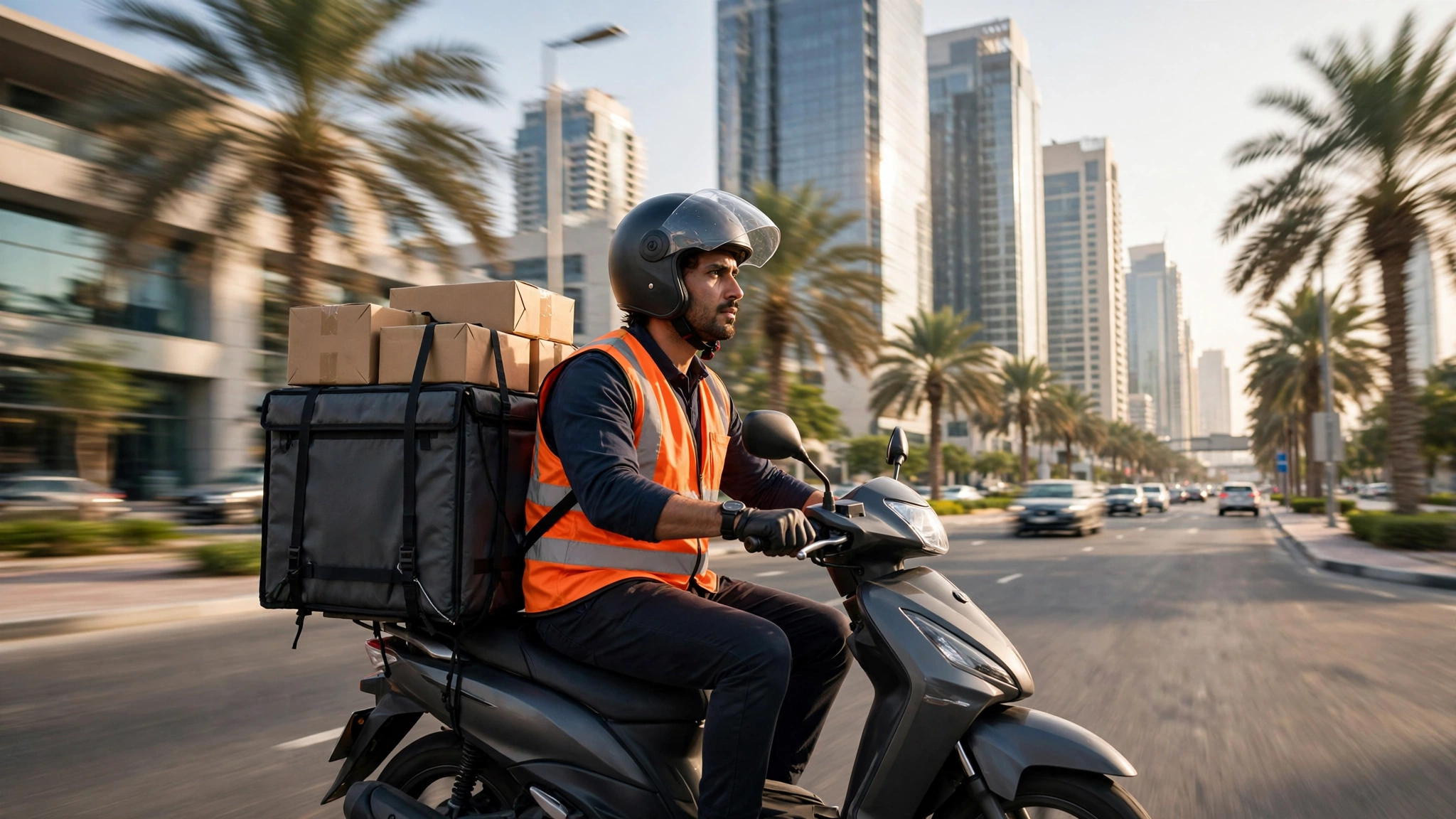
It’s the most expensive and most complicated stretch of any delivery: the final few kilometres from warehouse to doorstep. In the UAE, this “last mile” has become a laboratory for the future of logistics — where 15-minute grocery drops, autonomous robots, and delivery drones are moving from experiment to everyday reality.
Whether you’re an e-commerce business choosing a delivery partner or just curious about how your lunch arrives hot in 45-degree heat, here’s how last-mile delivery actually works in the Emirates.
Last-mile delivery is the final step of the supply chain: moving goods from a local fulfilment hub to the customer’s door. Industry studies consistently find it accounts for over half of total shipping costs, because it involves:
In the UAE, these universal challenges meet uniquely local conditions: extreme summer heat, high-rise living, and some of the world’s most demanding delivery expectations.
Several forces have turned the Emirates into a testing ground for delivery innovation:
Quick commerce in the UAE has expanded far beyond restaurant food. Platforms now deliver groceries, pharmacy items, pet supplies, and baby care in minutes. Noon Minutes promises 15-minute delivery using compact “mini stores” — dark stores positioned near demand hubs. Talabat operates its own Talabat Mart concept alongside restaurant delivery, while Carrefour offers roughly 60-minute grocery delivery from the nearest branch.
Speed is a real-estate problem as much as a logistics one. Operators are investing in dark stores, micro-fulfilment centres, and even fuel stations as delivery nodes — ADNOC Distribution and Noon launched 15-minute delivery hubs from ADNOC service stations, turning petrol stations into logistics infrastructure.
Delivery is increasingly bundled into subscriptions: Talabat Pro (from around AED 19/month for unlimited free delivery), Noon One, and Careem Plus all anchor high-frequency ordering. Some UAE banks now even include these memberships with credit cards — delivery has become part of the financial ecosystem. For more on managing these costs, see our UAE finance guides.
For businesses shipping goods into the country in the first place, our guide to freight forwarders in Dubai covers the international leg.
Dubai and Abu Dhabi are vertical cities, and towers are delivery’s biggest time sink. Riders can spend several minutes per order on building check-in, elevator waits, and navigating to the door. It’s such a recognised problem that Talabat partnered with robotics firm QuikBot to pilot robots that take over inside buildings — the rider hands off the order at a designated point, and the robot rides the elevator and delivers to the door, with the customer collecting via a one-time password.
Summer temperatures above 45°C punish both riders and vehicles. Fleets face rising fuel and maintenance costs, riders need heat management, and food packaging must survive conditions that would destroy a normal delivery bag. Customised, heat-resistant packaging is now standard for serious operators.
As delivery volumes grow, keeping more couriers on the road while reducing travel times is the central operational tension. More facilities closer to demand — the micro-fulfilment trend — is the main answer.
Nobody home, wrong building entrance, gated communities with strict access — every failed attempt roughly doubles the cost of that order. Real-time tracking, precise drop pins, and customer communication are the industry’s defences.
The UAE isn’t just coping with last-mile challenges — it’s actively prototyping the solutions:
Industry voices stress these technologies won’t replace riders — they’ll take on the specific frictions (tower waits, short repetitive hops) that make the final mile so expensive today.
If you sell online in the UAE, last-mile is your customer experience. Practical takeaways:
Understanding the cost structure explains why delivery fees look the way they do — and why “free delivery” is never really free:
The last mile used to be logistics’ most boring problem. In the UAE, it’s become its most exciting one — and the rest of the world is watching to see what works.