Physical Address
304 North Cardinal St.
Dorchester Center, MA 02124
Physical Address
304 North Cardinal St.
Dorchester Center, MA 02124

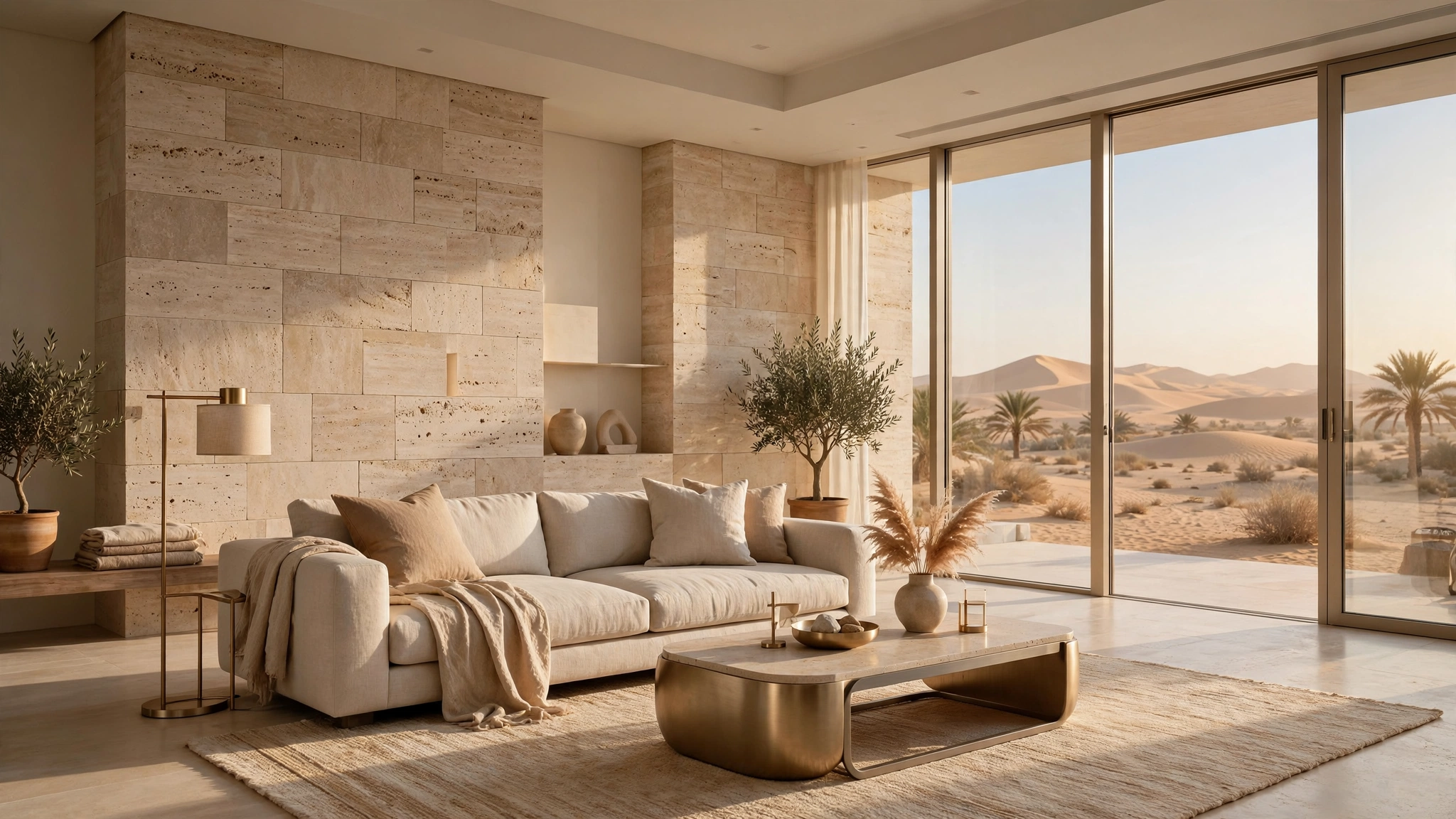
Dubai’s interiors are moving on from the all-white-and-gold maximalism of the last decade. In 2026, the city’s best homes and hospitality spaces share a calmer, more considered language — warm minimalism, honest materials, and technology that disappears into the background. Here’s what’s defining Dubai interiors right now.
The global “quiet luxury” movement has found a natural home in Dubai. Think: travertine and limestone, brushed brass rather than polished gold, bouclé and linen upholstery, and a palette of sand, stone, and warm white. The look is expensive without shouting — and it suits the Gulf’s light beautifully.
2026 is the year the smart home grew up in Dubai. Matter-compatible devices have finally made cross-brand setups reliable, and new villas increasingly ship with integrated lighting, climate, and shading scenes. The trend is toward invisible tech — speakers hidden in ceilings, keypads that replace banks of switches, and automated blackout blinds that make the 5am summer sunrise bearable. For the tech behind it, see our technology guides.
Driven by the UAE’s net-zero ambitions and genuinely hot summers, designers are specifying with climate in mind: recycled stone composites, FSC-certified timber, low-VOC paints, and — increasingly — materials with regional provenance. Cooling-conscious design (orientation, shading, thermal mass) is becoming a selling point, not an afterthought.
Dubai’s architects are rediscovering the courtyard house: inward-facing layouts with shaded outdoor rooms, plunge pools, and planting that cool the home naturally. In new villa communities from Tilal Al Ghaf to Dubai Hills, the private courtyard is the new status symbol — replacing the street-facing show facade.
Bold, heavily veined marble and quartzite — used sparingly as a kitchen island, a bathroom wall, or a fireplace surround — is the 2026 answer to the plain white slab. One dramatic stone moment per home; everything else stays calm around it.
Dubai’s hospitality DNA shows in residential briefs: upholstered headboards, layered lighting (pendants + reading sconces + cove), and proper blackout. The “five-star bedroom” remains the most requested room in the city.
Hybrid work is entrenched, and spare bedrooms are being designed as dual-purpose guest room/offices: quality task lighting, acoustic treatment, and joinery that hides the workstation when guests arrive.
Indicative 2026 ranges:
Always get itemised quotes, check a studio’s completed projects in person, and confirm who handles authority approvals (Dubai Municipality / developer NOCs) before signing. Renters should check our Dubai rental guide for what modifications tenancy contracts typically allow.
For more on furnishing a Dubai home, browse our shopping guides.
Dubai interiors in 2026 are calmer, smarter, and more climate-aware than ever. Whether you’re fitting out a villa or refreshing a rental, the winning formula is the same: honest materials, hidden tech, and one confident statement per room.