Physical Address
304 North Cardinal St.
Dorchester Center, MA 02124
Physical Address
304 North Cardinal St.
Dorchester Center, MA 02124

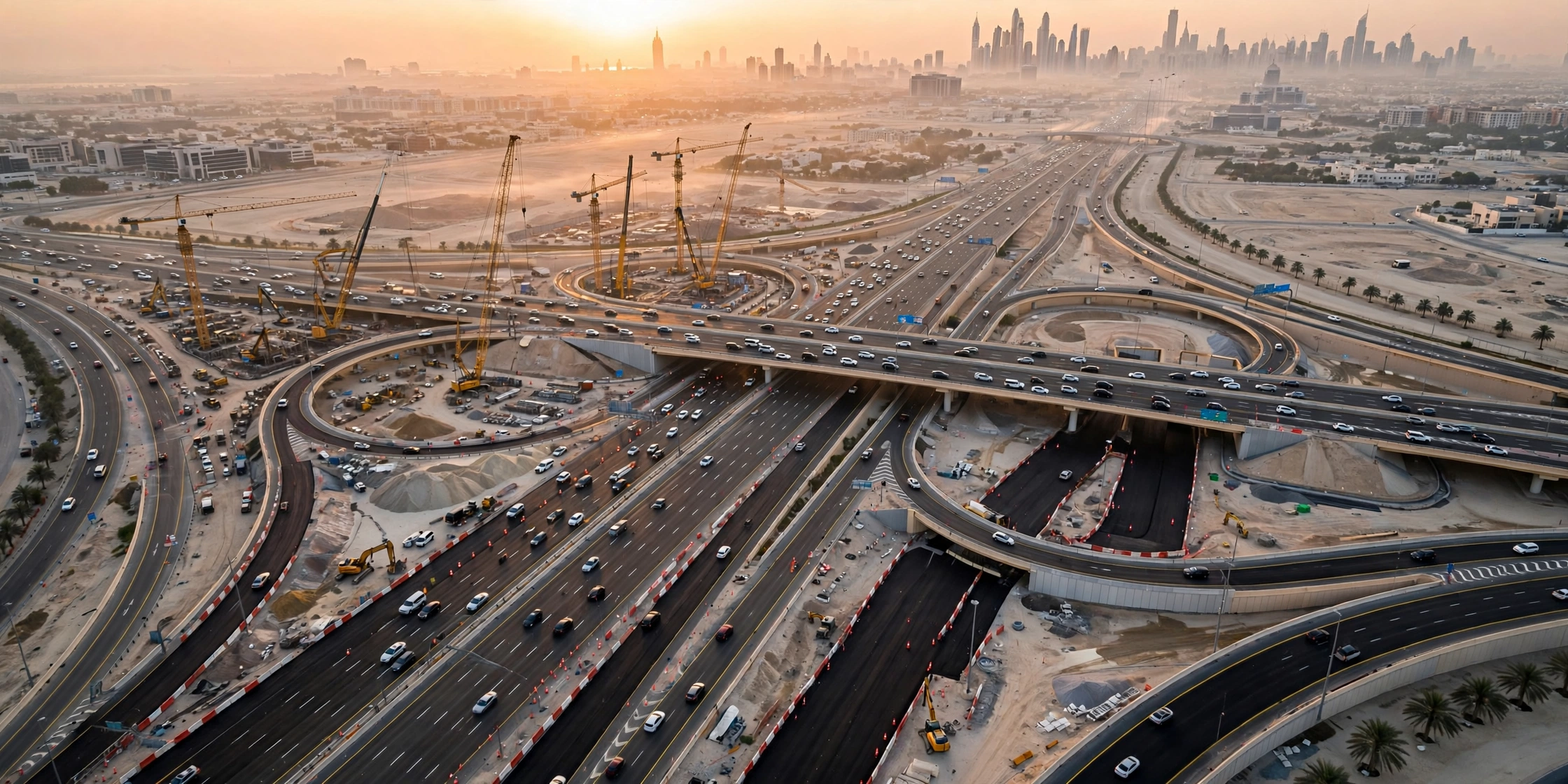
Anyone who drives in Dubai knows the paradox: a world-class road network that still jams every morning and evening. The Roads and Transport Authority (RTA) is attacking the problem on two fronts — mega-projects worth billions, and dozens of small “quick win” fixes at the worst bottlenecks. Here is what changed in 2026 and how to use it to your advantage.
In August 2026, RTA awarded two contracts worth AED 1.161 billion for the Al Meydan Street Development Project — a strategic corridor running parallel to Sheikh Mohammed bin Zayed Road and Al Khail Road. The works include 3.7 km of bridges and 17 km of roads, serving residential and development areas with a combined population of over 500,000.
RTA projects the corridor will increase north-south traffic capacity by 18% and cut the journey from Al Manama Street/Dubai–Al Ain Road to Umm Suqeim Street from 30 minutes to 10 minutes.
Completed in mid-2026, this package added a new lane on Ras Al Khor Road toward Al Khail Road (three lanes to four, +33% capacity) and a 1 km new lane on Al Khail Road toward Abu Dhabi. RTA reports road efficiency up 20% and the Ras Al Khor journey down from 15 to 12 minutes.
Two new lanes over a 5 km stretch from Sharjah toward Al Amardi Street — a critical corridor linking Dubai with the Northern Emirates. RTA expects peak-hour journey times to fall by 25%.
An 11.5 km programme paving and linking roads across 19 residential communities — from Al Khawaneej and Mirdif to Al Barsha and Al Satwa — targeting up to 40% shorter travel times in and out of those neighbourhoods. Scheduled for completion in the first half of 2026.
Alongside the mega-projects, RTA ran a summer 2026 programme of rapid fixes at 28 locations — timed for the school holidays to minimise disruption. These included widening exits, converting roundabouts to signalised junctions, adding lanes at chokepoints (such as Ras Al Khor toward Dubai–Al Ain Road, doubled from one lane to two), and new school parking to ease drop-off chaos. RTA says these targeted fixes typically cut journey times by 15–30% at each location.
The pattern is clear: RTA is systematically widening the corridors that hurt most — Al Khail, Ras Al Khor, Emirates Road, Hessa Street — while adding alternative parallel routes like Al Meydan Street. If your commute uses these roads, 2026–2027 should genuinely feel better. But construction itself causes temporary pain, so check RTA announcements before assuming your route is clear.
Dubai’s population keeps growing, and vehicle numbers grow with it. RTA’s strategy — big corridors plus dozens of surgical fixes, plus AI-optimised signals and expanding public transport — is about staying ahead of that growth. The Dubai Metro Blue Line (opening 2029) and continued bus and cycling investment show the long game is not just more lanes, but fewer car trips. For ongoing coverage, follow our UAE News section.
Dubai traffic in 2026 is a story of construction today for smoother commutes tomorrow. Know the projects on your route, time your trips around Salik peaks, and use the alternatives — the city is literally building you faster options.